
There is a kind of confidence that looks strong on the outside but is actually fear in uniform.
For years, you had a clear identity. You knew where you fit. You knew what you were good at. You had a role, a rhythm, a goal, a team, a future. Then things changed. Because life sometimes shifts in ways you would never choose.
That kind of loss is real. When something has carried your identity for years, losing it can feel like losing part of yourself.
But here is the hard truth:
God may be calling you to become a man whose identity is deeper than what he used to be good at.
That is where discernment matters.
- Discernment is not just saying, “I feel like this is what I’m supposed to do.”
- Discernment is not choosing the option that keeps your old identity alive the longest.
- Discernment is not calling something “God’s will” because it protects your pride, avoids grief, or lets you keep believing, “I still have it.”
You might still have talent. You might still have instincts. You might still have the heart of an athlete. But biblical discernment asks a deeper question:
Is this choice rooted in wisdom, surrender, and truth – or am I trying to rescue a version of myself that God is asking me to release?
As an athlete, you learned that instincts matter. But you also learned that instincts are not enough.
- A hitter can feel locked in and still chase a bad pitch.
- A pitcher can feel strong and still ignore the catcher’s sign.
- A player can believe he is ready and still need the coach to sit him down.
Discernment works the same way.
The Bible does not teach us to blindly trust every strong feeling.
- It teaches us to test our desires.
- It teaches us to examine our motives.
- It teaches us to listen to wise counsel.
- It teaches us to look at fruit.
- It teaches us to surrender our preferred outcome to God.
That means one of the most honest prayers you can pray is not:
“God, bless the path I want.”
It is:
“God, show me if I am calling this discernment when it is really pride, fear, comfort, or self-protection.”
That prayer takes courage.
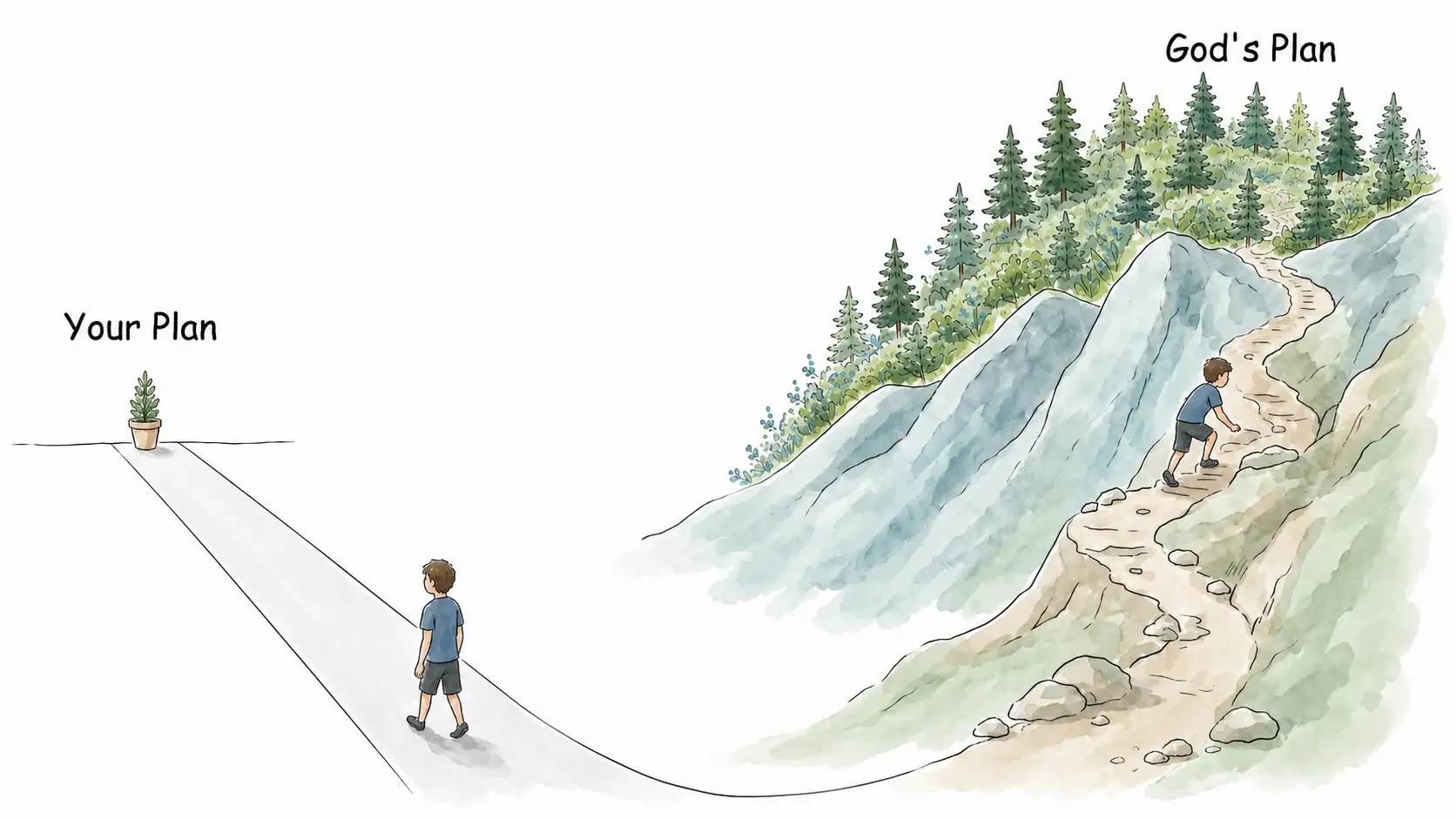
Because sometimes the harder path is not the one that proves you are still who you used to be. Sometimes the harder path is admitting that God is building someone new.
A mature man does not need to force old doors open to prove his worth. A mature man can say, “Lord, I wanted this badly. But I want truth more.”
God is not finished with you. But you may have to stop asking Him to preserve the old story long enough to notice the new one He is writing.
Discernment is about trusting God enough to ask:
What are You actually forming in me now?
Prayer
Lord, give me the courage to be honest about my motives. Show me where I am confusing my own desire with Your direction. Help me not to make decisions from pride, fear, grief, or the need to prove myself. Teach me to listen to wise counsel, test my heart, and trust You with the future. If You are closing one chapter, help me stop fighting You and start following You. Amen.
Questions to Sit With
- Am I choosing this because it is wise, or because it helps me avoid grieving what I lost?
- Have I asked people I trust to challenge me, or only to agree with me?
- If God clearly said “no” to this path, would I still trust Him?
- Is this decision producing humility, peace, discipline, and wisdom – or defensiveness, secrecy, pressure, and pride?
- Am I trying to prove I still have it, or am I letting God show me who I am becoming?